
Potty: the schedule, and paying at the spot
10 minutes
A schedule that makes accidents rare.
Why it matters: House training is a scheduling job, not a manners one. And the most common mistake is punishing accidents. Your puppy can't connect a puddle from ten minutes ago with your angry face. They just learn to pee where you can't see.
Three steps
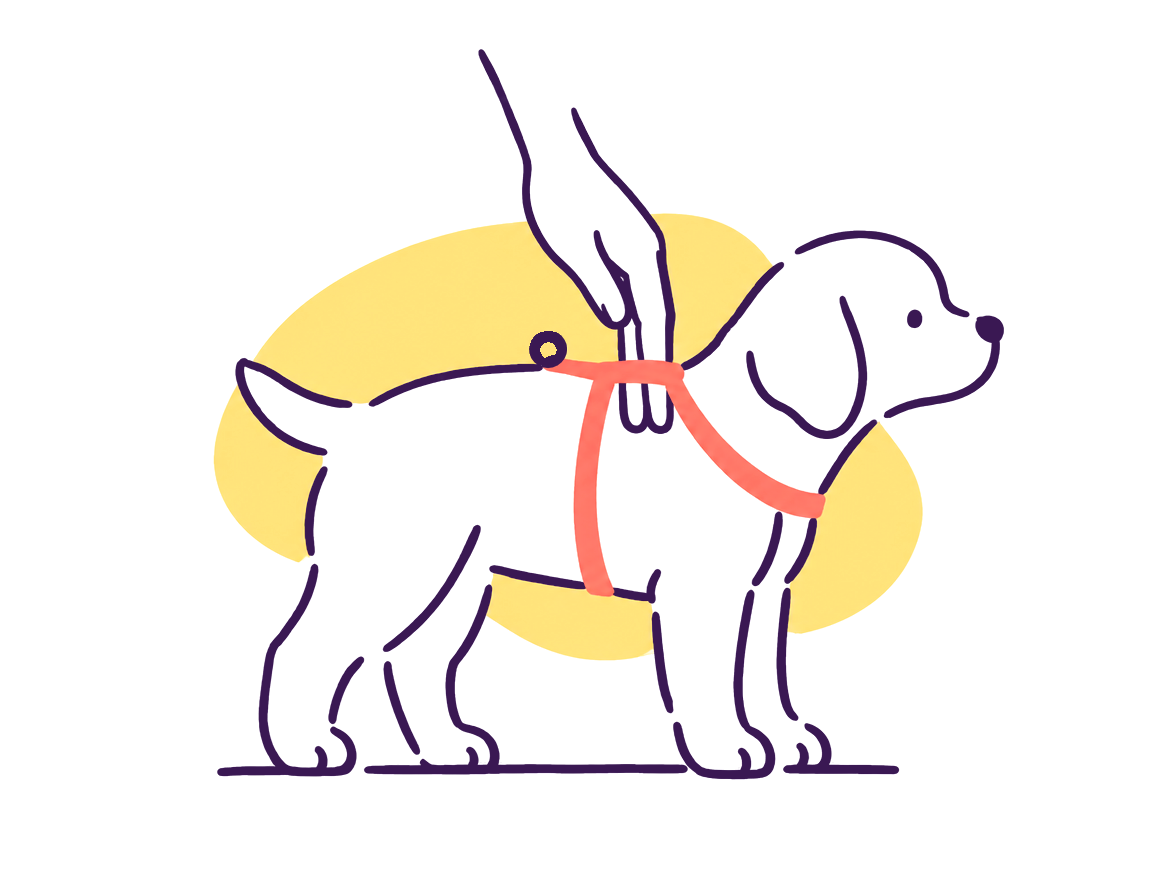
- Go out on a schedule: when your puppy wakes up, after eating, drinking, playing or chewing, and roughly every 1 to 2 hours while awake. Same spot, on a light leash, same quiet word ("go potty"). No play until they're done.
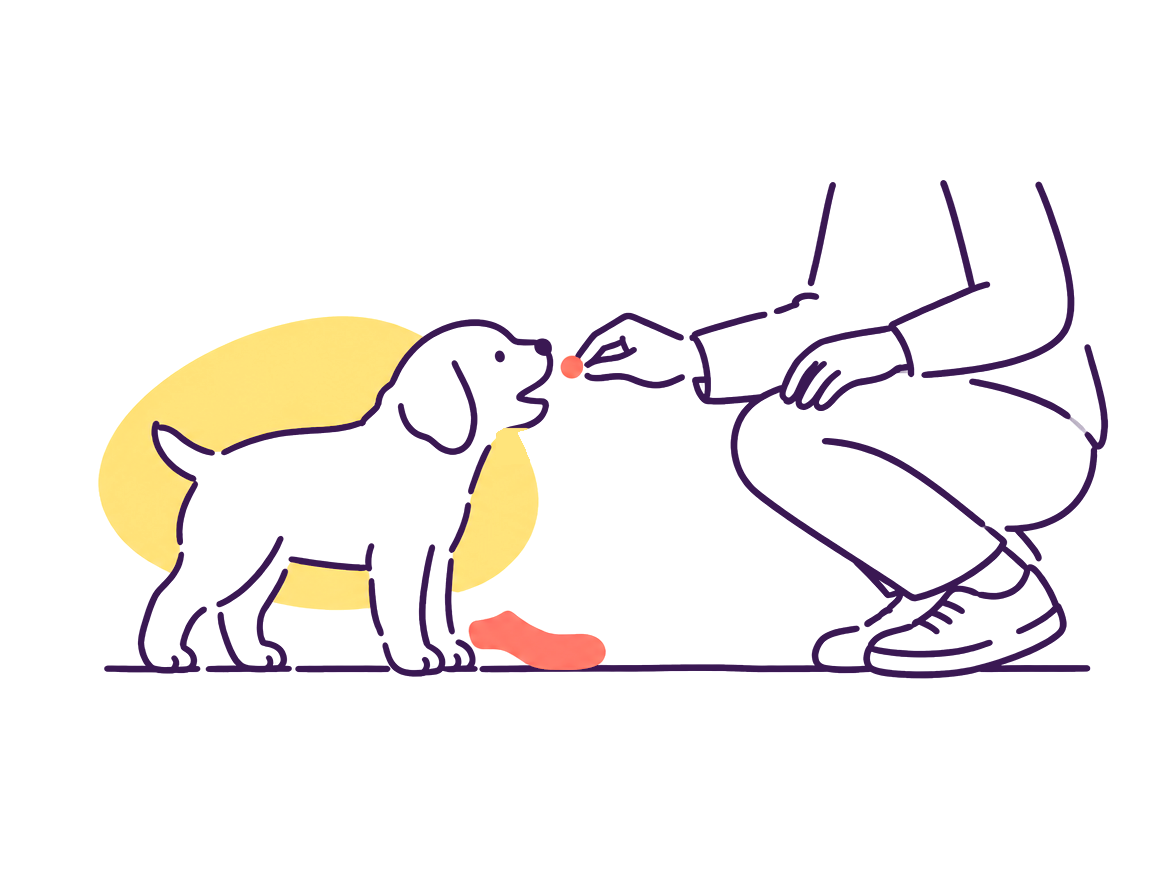
- Pay outside, the second they finish. A happy "yes!" and a treat right there at the spot. Not at the door. Then stay another minute: young puppies often go twice.
- Inside, keep your puppy in sight, behind a gate with you, or in the crate or pen. Start the log today: one tap for every pee, every poop and every accident.
The trip down takes time, so leave early. The moment your puppy wakes, pick them up and go: carried through the hallway and the elevator, feet down only at the spot. Shoes, leash and treats live by the door.
Don't: Scold, or rub their nose in an accident.
Do this instead: Say nothing. Clean it with enzyme cleaner (ammonia smells like pee to a dog, so it's an invitation), and make the next trip a little earlier. Caught mid-pee? Calmly pick them up and carry them to the spot.
What to expect: A few days of notes will show you your puppy's pattern. Reliable in a small, supervised home at around 4 to 6 months. Nothing after about 5 minutes at the spot? Back inside, crate or leash next to you, and out again about 15 minutes later. Is your spot on shared or public ground? Ask your vet whether your puppy can use it yet.
Done when
- Out after every nap, meal and game today
- Every trip paid at the spot
- Today's trips are in the log
Hard day? Then today is one small thing. Out after every nap today, and a treat at the spot the second they finish.