
Puppy's First Night Home: How to Get Through It
First-night crying is usually a scared or full puppy, not a stubborn one. How to set up the night, and what to do when they cry.
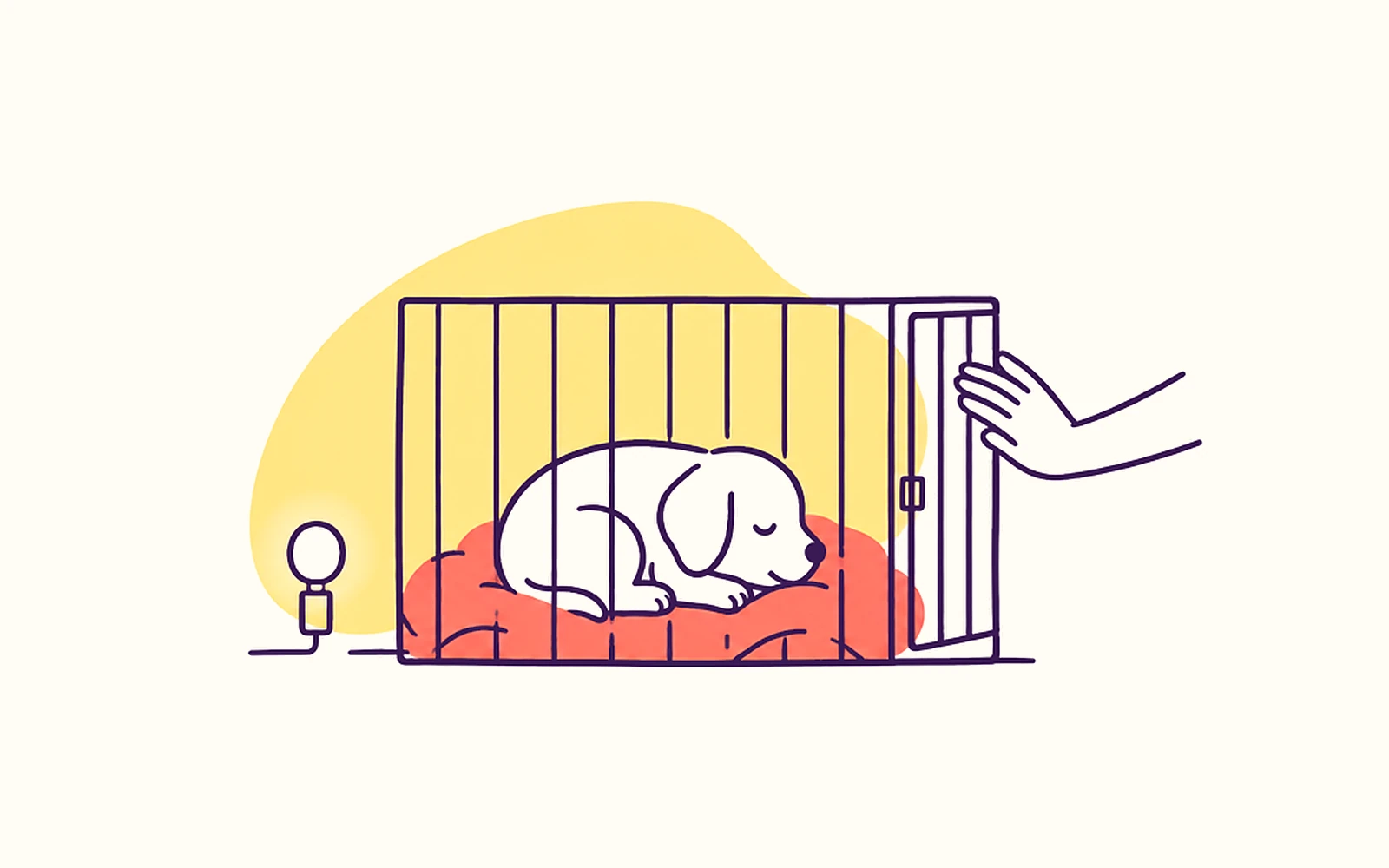
Your puppy just lost their mom, their siblings and every familiar smell. First-night crying is usually that, or a full bladder. Keep them close, keep the night boring, and most puppies settle within about 3 to 7 nights.
Keep the first day quiet
One or two people, no parade of visitors. Show the potty spot first, then let your puppy explore one room.
Set up the night
- Last meal about 3 hours before bed.
- Pick up the water bowl about an hour before bed, unless your vet says otherwise.
- Crate or pen next to your bed. Your worn T-shirt inside, and one safe chew.
- One last potty trip before lights out.
When your puppy cries in the night
Crying after a few hours of sleep usually means "I need to pee."
- Go out on leash to the potty spot.
- Keep it boring: quiet voice, no play.
- Straight back to bed.
At around 8 weeks, one or two night trips is normal. Comforting a scared puppy doesn't spoil them. It builds trust.
Keep the crate close
It's tempting to put the crate down the hall or in the garage "so they learn." It only teaches them they're alone. Next to your bed is where they belong for now.
Common questions
Should I ignore my puppy crying in the crate on the first night?
Comforting a scared puppy doesn't spoil them. It builds trust. Keep the crate next to your bed. Crying after a few hours of sleep usually means they need to pee, so take a quiet potty trip on leash.
How many times will my puppy need to go out at night?
At around 8 weeks, one or two night trips is normal. Keep each one boring: on leash, quiet voice, no play, straight back to bed.
How long until the nights get easier?
Most puppies settle within about 3 to 7 nights.
When to get help
These tips are for normal puppy stuff. Get hands-on help from a professional trainer (look for CPDT-KA, KPA-CTP or IAABC) if you see:
- Growling, a stiff body or a frozen stare over food, toys or their bed
- Bites that break skin on purpose, or again and again, or any bite to a child's face
- Fear that's getting bigger, not smaller
- Panic when alone: drooling, hurting themselves, nonstop crying
- You feel scared of your puppy
Call your vet for anything sudden: accidents after weeks of success, peeing small and often, blood, vomiting, not eating, limping, or crying when touched.

First 7 Days With Your Puppy
A gentle plan for your puppy's first week home. Ten minutes a day, no yelling, lots of treats. Free PDF, plus one short email a day for 7 days (switch them off anytime).
Send me the free planEvery tip is reviewed by a real professional dog trainer. Positive reinforcement only. Not veterinary advice.